|
The ability to form covalent bonds with other carbon atoms in long chains and rings distinguishes carbon from all other elements. This property of carbon, and the fact that carbon nearly always forms four bonds to other atoms, accounts for the large number of known compounds. At least 80 percent of the 5 million chemical compounds registered as of the early 1980s contain carbon. The affinity of carbon for the most diverse elements does not differ very greatly - so that even the most diverse derivatives need not vary very much in energy content. This ability allows the organic world to exist in a special form of thermodynamic stability.
 |
 |
The electron configuration of the normal carbon atom has 2 electrons in energy level 2S and 2P respectively. By supplying about 2 ev to a carbon atom, the 4 electrons in the 2S and 2P states are rearranged to the SP3 state (Figure 07a). The four electrons in the SP3 state form the tetrahedral arrangement (Figure 07b) of orbitals
|
| |
(probability distribution of electrons), which can form stable covalent bonds with other atoms. This is the basic |
reason for pumping energy into biological system to maintain metabolism and cellular structure. Therefore, the biological system is said to be in a non-equilibrium state. The electrical discharge in Stenley Miller's experiment represents the energy input required to
 |
move the molecular configuration into the non-equilibrium state. The continual free energy input from the environment will lead to a dissipative structure (Figure 11-07c), which is a necessary condition for life. However, not all dissipative structures are living systems, non-life examples include convection, hurricanes, the Solar system, and galaxies, ... Living system can form only when the dissipative structure begins to perform work. As the hybrid orbitals of the tetrahedral configuration do not exist in an isolated atom, but arise while that atom is interacting with others to form a molecule, it will dissolve and return |
|
to an equilibrium state once the input of free energy ceases causing the removal of the associated constituents.
|
It is known that carbon nuclei are produced in the interior of stars (see more in "Origin of Elements"). It comes about in a two-step process: (1) He2 + He2 Be4, (2) He2 + Be4 C6. One would have expected this two-step process to be extremely improbable, but remarkably the last step happens to be a resonance, which enables it to proceed at a rate far in excess of our naive expectation. The positioning of the resonance levels is determined in a complicated way by the precise numeral values of the constants of physics. Thus, it can be argued that we owe our existence to the fortuitous coincidence of some numbers after all that's been said and done.
[Top]
 |
 |
Carbohydrate is characterized by the presence of the atomic grouping H-C-OH, in which the ratio of H to O is approximately 2:1. Because water has this same ratio of hydrogen atoms to oxygen atoms, hence the name carbohydrate, which
| | Figure 11-08b Synthesis and Hydrolysis [view large image] |
means hydrates of carbon, was given to them. If the number of carbon atoms in a compound is low (from 3 to 7), then the carbohydrate is a simple |
|
sugar, or monosaccharide. Larger carbohydrates are created by joining monosaccharides as shown in Figure 11-08b. Figure 11-08a shows a 5-carbon sugar called ribose, which is a component of RNA (deoxyribose has one less oxygen atom attached to the second carbon atom, hence the name DNA); and a 6-carbon sugar called glucose. The small numbers count the carbon atoms, which is important in specifying the carbon atom linkage (to other atom or group of atoms). Figure 11-08b shows the synthesis and hydrolysis (dissociation) of glucose. Polysaccharide is a carbohydrate that contains a large number of | | monosaccharide molecules (including glucose, fructose, and galactose). There are 3 polysaccharides that are common in organisms: starch, glycogen, and cellulose. Glucose is used as an energy source in cells. Starch and glycogen are storage form of glucose in plant and animal cells, respectively, and cellulose is found in plant cell walls. Naturally occurring sugars are all right-handed. Its mirrored version, i.e., the left-handed sugar can be produced artificially, but cannot be digested by living organism (making it a good but expensive dietary sugar). They are called chiral objects that cannot be superimposed on each other. |
[Top]
 |
 |
Lipids are a heterogeneous collection of compounds that share only one property: they are easily dissolved in organic solvents but can only hardly or not at all be dissolved in water. They include fats and oils, phospholipids,
| |
|
steroids, glycolipids, and waxes. The basic units for fat are fatty acids either saturated (in solid form) or unsaturated |
(in liquid form, the good one to prevent the deposits of cholesterol and fat on the lining of blood vessels; unsaturated compounds can undergo addition reactions with various reagents that cause the double or triple bonds to be replaced with single bonds). Each fatty acid has a long chain of carbon atoms with hydrogens attached, and it ends in an acid group (COOH) as shown in Figure 11-09. A fat (or an oil and sometimes also called a triglyceride) is formed when one molecule of glycerol reacts with 3 fatty acids as shown in Figure 11-10. Glycerol is a compound with 3 hydrates of carbon. A fat is nonpolar, i.e., the molecule has no groups that can be ionized and become charged. It is the long-term energy source. Since it contains more C-H bonds and less oxygen than carbohydrates, lipids can store twice as much energy. This is why all animals (and some plants) use them for energy storage and respited after supplies of carbohydrates are exhausted.
 |
Phospholipids, as their name implies, contain a phosphate group PO4-. Essentially, phospholipids are constructed as fats are, except that in place of the third fatty acid, there is a phosphate group or a grouping that contains both phosphate and nitrogen (Figure 11-11). These molecules are not electrically neutral as are the fats because the phosphate group can be ionized.
|
|
|
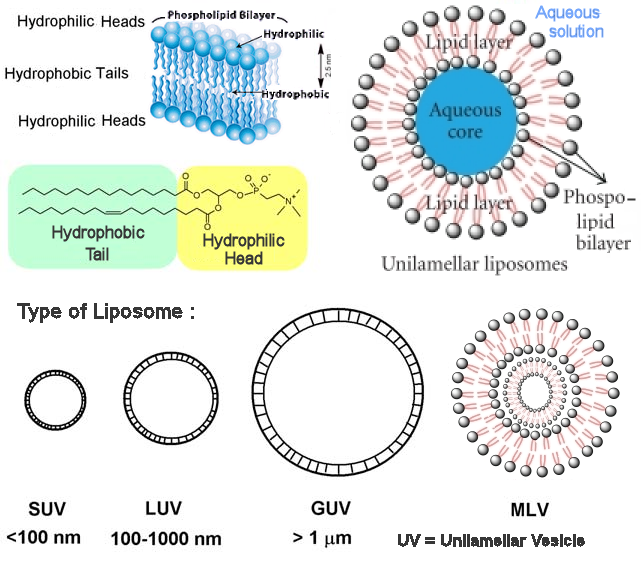
Therefore, the phospholipids have a nonpolar region that is not soluble in water and a polar region that is soluble. Most of the lipids in the cell membrane are phospholipids. Each phospholipid molecule has a polar head and 2 nonpolar tails. When surrounded by water, phospholipid molecules form a bilayer naturally. The heads, being polar, are attracted to the water (hydrophillic), which is also polar; therefore, the heads face outward. The nonpolar tails face inside, away from the water (hydrophobic). Some of the lipids in the cell membrane are glycolipids. Glycolipids are constructed similarly to phospholipids except the polar head consists of a chain of sugar molecules. Glycolipids only occur in the outer half of the bilayer, where they function in cell-to-cell recognition. Different types of cells have different glycolipids.
 |
Steroids are lipids that have entirely different structures than fats (see Figure 11-12). Molecules such as hormones, vitamin D, bile acids, and cholesterol are examples of steroids in the body. Steroids are found in plant and animal food sources; however, cholesterol is derived only from animal sources. Hormones are used to regulate chemical in body, vitamin D is important for bone and teeth formation, bile acids is digestive fluid for the absorption of fats, and cholesterol is important to the body as a constituent of cell membranes, and is involved in the formation of bile acid and some hormones. Cholesterol is associated with heart and blood vessel diseases because it collects on the inside of vessel walls and restricts blood flow.
|
|
Waxes are found in many plants and animals. Coatings of carnauba wax on fruits and the leaves and stems of plants help to prevent loss of water and damage from pests. Waxes on the skin, fur, and feathers of animals and birds provide a water-proof coating. Properties of some waxes are listed in Table 11-01 below.

|
Table 11-01 Properties of Waxes |
[Top]
Nucleotide - The basic unit for DNA and RNA is the nucleotides, which consist of three components: the nitrogen bases, the
 |
 |
 |
ribose sugars, and the phosphates. The nitrogen bases include the two purines, adenine (A) and guanine (G); and the two pyrimidines, cytosine (C) and thymine(T). RNA contains the same bases,
|
Figure 11-13 Bases [vli] |
Figure 11-14 DNA Sugars and Phosphate [view large image] | | except thymine is replaced by uracil (U) (Figure 11-13).
|
In RNA, the sugar is ribose while in DNA, the sugar is deoxyribose (no oxygen is bonded in the 2' carbon) (Figure 11-14). And finally, there is the phosphate which forms part of the backbone (of the helix). The combination of the base and sugar is called nucleoside with the correponding products called (deoxy)adenosine, (deoxy)guanosine, (deoxy)cytidine, dexoythymidine and uridine. The product is called nucleotide with the additional element of phosphate (Figure 11-15); the naming convention is to add "5'-monophosphate" (5' indicates the 5th carbon) at the end, e.g., "adenosine 5'-monophosphate". The abbreviations are (d)AMP, (d)GMP, (d)CMP, (d)TMP, and UMP. Any of the nucleotide such as AMP can bond to additional phosphate groups. For example, adding another phosphate to AMP gives ADP (adenosine 5'-diphosphate) and ATP (adenosine 5'-triphosphate) when there are a total of three phosphates. ATP is a nucleotide that is used as a carrier of energy in cells. Energy is released when ATP is | | broken down to ADP and phosphate. As it will be explained further later, the energy package stored in the ATP serves to weld together the amino acid units in proteins and the nucleotide units in DNA and RNA, as well as the units in sugar and phospholipid molecules that abound in cells. The cAMP (c for cyclic) used by slime mould as molecular signal is a compound made from ATP. It is still used by more complex organisms for the same purpose. cAMP is widespread in animal cells as a second messenger in many biochemical reactions induced by hormones. Upon reaching their target cells, the hormones activate adenylate cyclase, the enzyme that catalyses cyclic AMP production. Cyclic AMP activates a cascade of enzymes, which results in a thousand-fold response just from the binding of a single hormone molecule to a receptor on the cell membrane. Cyclic AMP is also involved in controlling gene expression, cell division, immune responses, and nervous transmission.
|
[Top]
 |
The building blocks of proteins are amino acids. An amino acid contains an amino group (-NH2), a carboxylic acid group (-COOH), and a side chain (R). The carbon at the center is called the alpha-carbon (Figure 11-16). Although there are many amino acids, only 20 different amino acids are present in humans. The unique characteristics of the 20 amino acids are due to the side chain. |
Figure 11-16 Amino Acid |
 |
Figure 11-17 shows the 20 amino acids (with three-letters and one-letter abbreviations following the full name). Nonpolar amino acids are not soluble in water, which makes them hydrophobic. Polar amino acids have hydrophilic side chain, which forms hydrogen bonds3 with water. Acidic amino acids have side chains that can ionize as a weak acid. The side chains of the basic amino acids contain an amino group that can ionize as a weak base. The numbers at the bottom of each graph is the value of isoelectric point (pI). The isoelectric point is a value of pH at which the amino acid gives an overall charge of zero and not accepting or donating any H+ ion in a solution. The hexagon is the benzene ring C6H6. Amino acids on earth are all left-handed with the NH2 group to the left. Essential (E in Figure 11-17) amino acids cannot be synthesized by the human body and must be provided through diet, while non-essential (NE) amino acids are synthesized by the body from carbon, nitrogen, hydrogen, oxygen, and sulphur.
|
| | |
 |
The bond that joins 2 amino acids is called a peptide bond. The NH2 and OH group at the end of the peptide are available for adding more amino acids to the chain. (Figure 11-18a). Combining amino acids to form peptide will release water, while adding water to peptide will break it up into individual amino acids.
| | |
Isomers are two similar forms of molecule being the mirror image of each other. They exhibit chirality if the two forms cannot be superimposed as shown by the amino acid (the left-handed form) in Figure 11-16 and the D-amino acid (the right-handed form) in Figure 11-18b. The laws of quantum chemistry do not favor either variety over the other. But life on Earth uses almost exclusively left-handed amino acids to build proteins, and right-handed sugars to build nucleic acids. Such facts imply that all life on Earth today is descended from a common ancestor. Since the handedness affects the polarization of light by rotating the polarization angle to the left or to the right, it is found that asymmetry in handedness extends all the way to the Orion molecular cloud with the detection of circularly polarized light (in the infrared) from there. The implication is that a characteristic pattern of handedness will be imprinted on all the material from which a group of stars forms together. But since
 |
circularly polarized light can itself be either left-handed or right-handed, depending on how it rotates, molecules in different interstellar clouds (or even in different parts of the same cloud) may be affected in different ways. Thus, there is still a chance that stranded space travelers will starve amidst plenty because their metabolisms could not cope with the food found on other worlds.
| |
|
[Top]
|
Before we continue on to the subject of macromolecules, it is necessary to clarify the way the molecules become organized and how energy is used to drive the system to a non-equilibrium state as mentioned in topic 1.
When energy (such as in a photon) is pumped into a chemical system, the energy partitions into thermal and electronic components. The thermal component makes the molecules move faster, and the electronic component increases the number of "high-energy" electronic states. Both energy components will foster molecular organization: the faster the molecules vibrate, rotate, and translate, and the more of them that are in electronic states above ground level, the higher is the probability that the molecules will interact and the more work can be done in organizing them. However, there is a limit to that. At very high energy levels all chemical bonds become inherently unstable, the molecular structures eventually fall to pieces. It draws the line to the energy input; it is impossible to make a macro- molecule in one run from scratch. It has to be made by supplying the required energy little by little. The aggregates (such as DNA or protein) are created by joining the units one at a time. This way each step of molecular synthesis could be driven by a separate and tolerable energy input.
Living organisms store photon energy in chemical form, and then trickle it down molecular chains to the individual molecular bonding sites. The energy flux that organizes all living matter on our planet is so channeled as to first pump CO2 and H in the atmosphere and water up to the level of | | carbohydrate, namely glucose, and then to drop the level gradually from that reservoir back to the ground again. This gradient drives nearly all work in the biomass, not just the making of macromolecules. The smallest unit for this chemical (energy) currency is stored in the third phosphate bond of the ATP.
The flow starts with the capture of photons by certain molecules, such as the chlorophyll of plants and similar pigments of microorganisms according to the photosynthesis reaction:
6CO2 + 6H2O + energy C6H12O6 + 6O2
Respiration runs in the reversed direction. While the energy input is carried by photons in photosynthesis, the energy output in respiration is distributed among a maximum of 38 ATPs.
The photon energy is stored in the covalent bonds3 of glucose -- about 6 quanta of photon in one glucose molecules. From this reservoir, energy then flows along various pathways, nursing everything, all organization and all work. The chemical energy chains that nurse macromolecular organization commonly use ATP as their final link. Each package contains an energy of 7.3 kilocal per mole (~ 0.3 ev/ATP4). It is given off at the sites of amalgamation of the molecular building blocks -- one package for each site with spatial precision to where it is needed.
|
The following chemical formula shows a simple case of molecular synthesis. The 7.3 kilocalorie package of ATP is fed into the site of elongation, the last member of the carbon chain. NH2 is added to the glutamate using the energy from the hydrolysis of ATP (into ADP and Pi, the phosphate). The glutamine becomes an energized molecular system stably links a NH2 group to the chain.
 |
Since aerobic respiration (energy-producing process with air) requires oxygen, the energy carrier ATP cannot be manufactured in the absence of this substance. The aerobic cells and organism will soon expire because the metabolism will stop without energy supply. The energized covalent bonds would break down due to a variety of causes such as thermal agitation, chemical corrosion, biological degradation, and damage by radiations. In addition, water would tends to hydrolysis many of the organic compounds. Eventually, the organism would return to dust (the basic chemical components) just like an old house crumbling down to ruin.
The rate of energy comsumption for all orgamisms from whale to single cell seems to follow a simple 3/4 power-law of the body mass (see "Metabolic Rate and Kleiber's Law" in the appendix for detail).
[Top]
 |
DNA is formed by joining together nucleotides with the phosphate groups link to the sugars at the 3' and 5' carbons. This is the backbone held up by covalent bonds. The nitrogen bases are attached to the 1' carbon in the sugar. The complementary DNA strand has the same kind of construction but running in opposite direction (with the 5-sugar pointing upside down). The two strands are joined by weaker hydrogen bonds (H-O or H-N). The pairing of the bases can occur only between Adenine (A) and Thymine (T) or Guanine (G) and Cytosine (C) (See Figure 11-19). DNA replication occurs when the complementary strands of DNA break apart and unwind. This is accomplished with the help of enzymes called helicases. Additional enzymes and proteins attach to the individual strands, holding them apart and preventing them from coiling upon themselves.
|
Figure 11-19 DNA Structure |
|
 |
The point at which the double helix separates is called the replication fork, because of the shape of the molecule. At this site enzymes called DNA polymerases move along each of the separated DNA strands, adding nucleotides to the exposed bases according to the base pairing rules. The ribose-phosphate bonds form between the new nucleotides to hold the new strand together. The synthesis acquires energy via the removal of two phosphates from the triphosphate. The process continues until the original double helix is completely unwound and two new double helices have been formed. Each new double helix is composed of one old DNA strand and one new strand. This is described as semi-conservative replication. (See Figure 11-20.)
There is a small variation for the processing on the other strand and is lagging behind the leading strand. The polymerase on the lagging strand adds bases to one section of the strand at one place, jumps ahead to add bases to a different section of the lagging strand. Then it may jump behind to add more. It
|
Figure 11-20 DNA Replication |
jumps all over the place on the lagging strand to make base pairs. These small fragments are joined together by DNA ligase. |
|
A mutation is a change in the DNA nucleotide sequence that alters the sequence of amino acids, which would alter the structure and function of a protein in a cell. Some mutations are known to result from X-rays, UV light, chemicals called mutagens, and possibly some viruses. If a change in DNA occurs in a somatic cell, the altered DNA will be limited to that cell and its daughter cells. If there is | | uncontrolled growth, the mutation could lead to cancer. If the mutation occurs in germ cell DNA, then all the DNA produced in a new individual will contain the same genetic change. If the genetic change greatly affects the catalysis of metabolic reactions or the formation of important structural proteins, the new cells may not survive or the person may exhibit a genetic disease (see Hallmarks of Cancer). |
[Top]
RNA is similar to DNA with several important differences:
- The sugar in RNA is ribose rather than the deoxyribose found in DNA.
- The nitrogen base uracil replaces thymine.
- RNA molecules are single, not double stranded.
- RNA molecules are much smaller than DNA molecules.
There are three major types of RNA in the cells: messenger RNA (mRNA), which makes up about 75% of RNA; transfer RNA (tRNA), which makes up about 15% of the total; and ribosomal RNA (rRNA), which makes up the rest of 10%.
 |
 |
mRNA carries genetic information from the DNA in the nucleus to the ribosomes in the cytoplasm for protein synthesis. Each gene, a segment of DNA, produces a separate mRNA molecule when a certain protein is needed in the cell, the mRNA is broken down quickly after translation. The size of an mRNA depends
|
| |
|
on the number of nucleotides in the gene.
|
|
In the initiation stage, RNA polymerase binds to promoters and starts to unwind the DNA strands. In the elongation stage, RNA polymerase reads the DNA template stand from 3’ to 5’ and produces the RNA transcript from 5’ to 3’. The nucleotides are always added to the 3’ end of the growing RNA. In the final stage, the RNA polymerase reaches the termination site and the RNA transcription, i.e., the messenger RNA is released from the template. (Figure 11-21a.) In eukaryotes, the genes contain sections known as exons that code for proteins, are mixed with sections | |
called introns that do not code for protein. A newly formed mRNA is called a pre-mRNA because it is a copy of the entire DNA template including the noncoding introns. Before the newly synthesized pre-mRNA leave the nucleus, it undergoes processing to remove the intron sections. The splicing of the pre-mRNA produces a mature, functional mRNA that leaves the nucleus to deliver the genetic information to the ribosomes for the synthesis of protein. (Figure 11-21b)
|
 |
A 2008 genome-wide surveys of gene expression in 15 different tissues and cell lines have revealed that up to 94% of human genes generate more than one product. Only about 6% of human genes are made from a single, linear piece of DNA. Most genes are made from sections of DNA found at different locations along a strand. The data encoded in these fragments are joined together into a functional messenger RNA (mRNA) molecule that can be used as a template to generate proteins. It produces even more alternatives with the same gene assembled in different ways, sometimes leaving out a piece, for example, or including a bit of the intervening DNA sequence. This process, called alternative splicing, can produce mRNA molecules and proteins with dramatically different functions, despite being formed
|
|
from the same gene (Figure 11-22). It is found that such process happens most often in human. Thus we may have about the same number of genes as for lower animals, alternative splicing provides a way to make us more sophisticated, complex and intelligent. |
 |
 |
tRNA, the smallest of the RNA molecules, interprets the genetic information in DNA and brings specific amino acids to the ribosome for protein synthesis. Only the tRNA can translate the genetic information into amino acids for proteins. There are one or more different tRNAs for each of the 20 amino acids. The structures of the transfer RNAs are similar, consisting of 70-90 nucleotides. Hydrogen bonds between some of the complementary bases in the |
| |
Figure 11-24 Three Dimensional Structure of tRNA [view large image] |
chain produce loops that give some double-stranded regions (See Figure 11-23). The actual structure of a tRNA |
is a three-dimensional L shape, (See Figure 11-24.) but it is often drawn as a cloverleaf to illustrate its features. All tRNA molecules have a 3' end with the nucleotide sequence -- ACC, which is known as the acceptor stem. An enzyme attaches an amino acid by forming an ester bond with the free -- OH at the end of the acceptor stem. Each tRNA contains an anticondon, which is a series of three bases that complements the three bases on a mRNA.
 |
rRNA makes up 65% of the structural material of the ribosomes; the other 35% is protein. Ribosomes, which are the sites for protein synthesis, consist of two subunits, a large subunit and a small subunit. Protein synthesis requires mRNA, tRNA, amino acids, ribosomes, ATP, and various protein factors. These pieces come together at the beginning of translation, in a stage called translation initiation. Translation begins when an mRNA molecule binds to a segment of rRNA that is part of a small ribosomal subunit. The |
| |
anticodon of a tRNA bearing methionine (met) bonds to the initiation codon (AUG) on the mRNA. These bound structures form the initiation complex. Next, a large ribosomal subunit binds to the complex, and a tRNA bearing a second amino acid bonds between
|
its and the second mRNA's codon. The amino acid brough in by the first tRNA bonds with the amino acid brought in by the second tRNA, and the first tRNA detaches and floats away. The ribosome moves down the mRNA by one codon, and a
 |
third tRNA arrives, carrying another amino acid, (See Figure 11-25a.) ... and the process continues until a termination codon is reached. Each of the three bases (the codon) in the mRNA is translated into an amino acid according to the genetic code (see Figure 11-25b). For example, an tRNA with bases CCG in the anticodon and amino acid Glycine (Gly) in the attachment site would bind to the condon GGC in the mRNA, the amino acid Glycine (Gly) would be added to the growing protein chain in the ribosome as a result of this combination.
| | |
|
The process of gene expression starts from transcription of a gene to the production of a protein. However, some genes inside the cell are harmful and should never be expressed. The mobile genetic elements (jumping genes) migrate from spot to spot on the DNA; its expression will cause cancer or other diseases. Similarly, the genes from viruses will hijack the cell's protein production facilities to crank out viral proteins. Cells have ways of fighting back. For example, the mammalian cells would deploy interferon response when viral genes enter a cell. This response produces an enzyme known as PKR, which blocks translation of all mRNAs (normal and viral), and the enzyme RNAse L, which indiscriminately destroys all mRNAs.
 |
In the past several years, scientists have discovered a more precise and - for the purposes of research and medicine - more powerful security apparatus built into nearly all plant and animal cells. This system is called RNA interference, or RNAi, which acts like a censor. When a threatening gene is expressed, the RNAi machinery silences it by intercepting and destroying only the offender's mRNA, without disturbing the mRNAs for the other genes. RNAi also regulates the activity of normal genes during growth and development.
|
| |
|
The gene-censoring mechanism is thought to have emerged about a billion years ago to protect some common ancestor to plants, animals and fungi against viruses and mobile genetic elements. RNAi appears to work like this (as shown in Figure 11-26a): Inside a cell, double-stranded RNA encounters an enzyme dubbed Dicer. Using the chemical process of hydrolysis, Dicer cleaves the long RNA into pieces, known as short interfering RNAs, or siRNAs. Each siRNA is about 22 nucleotides long. The siRNA duplex is then unwound, and one strand of the duplex is loaded into an assembly of proteins to form the RNA-induced silencing complex (RISC).
Within the RISC, the siRNA molecule is positioned so that mRNAs can slide into it. The RISC will encounter thousands of different mRNAs that are in a typical cell at any given moment. But each siRNA of the RISC will adhere well only to a mRNA that closely complements its own nucleotide sequence. So, unlike the interferon response, the silencing complex is highly selective in choosing its target mRNAs.
When a matched mRNA finally docks onto the siRNA, an enzyme know as Slicer cuts the captured mRNA strand in two. The RISC then releases the two mRNA pieces (now rendered incapable of directing protein synthesis) and moves on. The RISC itself stays intact, free to find and cleave another mRNA. In this way, the RNAi censor uses bits of the double-stranded RNA as a "blacklist" to identify and mute corresponding mRNAs.
 |
When the RNAi machinery is not defending against attack, it apparently pitches in to help silence normal cellular genes during developmental transitions for producing disparate cell types, such as neurons and muscle cells, or different organs, such as the brain and heart. The triggers are "microRNAs" - small RNA fragments that resemble siRNAs but differ in origin. Whereas siRNAs come from the same types of genes or genomic regions that ultimately become silenced, microRNAs come from genes whose sole mission is to produce these tiny regulatory RNAs. The RNA molecule initially transcribed from a microRNA gene - the microRNA precursor - folds back on itself. With the help of Dicer, the middle section is chopped out of the microRNA, and the resulting piece typically behaves very much like an siRNA - with the important exception that it does not censor a gene with any resemblance to the one that produced it but instead censors some other gene altogether. However, this control mechanism can be nullified by attaching an inhibitor to the microRNA (Figure 11-26b).
|
| |
|
[Top]
 |
 |
Proteins commonly have 3 levels of organization in their structure (Figure 11-27), but they can combine to form the fourth level (Figure 11-28). The primary structure is the linear sequence of the amino acids joined by peptide bonds. Any number of the 20 different amino acids can be joined in any sequence (only a certain sequences are useful to the organisms). Any given protein has a characteristic sequence of amino acids.
|
|
Figure 11-28 Quarternary Structure |
|
|
The secondary structure of a protein comes about when the polypeptide chain takes a particular orientation in space. One common arrangement of the chain is the alpha helix, or right-handed coil, with 3.6 amino acids per turn. Hydrogen bonding between amino acids stabilizes the helix. Another type of secondary structure is known as the beta-pleated sheet. Such polypeptide chains are held together side by side by hydrogen bonds between the peptide chains. A protein can consist of alpha helix, beta-pleated sheet, or a mixture of the two types. The amino acids Alanine, Cysteine, Glutamic Acid, Glutamine, Histidine, Leucine, | | Lysine, and Methionine are found in alpha helix region; while Arginine, Aspartic Acid, Asparagine, Proline, Serine, and Valine are found in beta-pleated sheets.
The tertiary structure of a protein is its final three-dimensional shape. The tertiary shape of a protein is maintained by various types of bonding between the R groups. Covalent, ionic, and hydrogen bonding are all seen.
When two or more polypeptide chain interweave to form one molecule the protein has a quarternary structure. |
The protein folds to the state of minimum energy. (See Figure 11-29a) Its sequence has to produce an unique configuration to be useful for living organism. The final shape of a protein is very important to its function. When proteins are exposed to extreme heat and pH, they undergo an irreversible change in shape called denaturation. The change occurs because the normal bonding between the R groups has been disturbed. Once a protein loses its normal shape, it is no longer able to perform its usual function.
It is known that even if the gene can code a correct sequence of amino acids and the ribosome can translate the coding without error, the resulting protein can misfold and cause serious problem for the organism. As shown in Figure 11-29a, it seems that the repulsion between some key residues (a recurring unit in a polymer chain such as the amino acid in protein)
 |
 |
such as the hydrophobic and polar residues is essential to establish a rudimentary native-like architecture (the saddle point in the diagram). Once the correct topology has been achieved, the native structure (the natural conformation of a protein) will then almost invariably be generated during the final stages of folding. There are molecular chaperones in the cell to weed out the misfolded proteins as shown in Figure 11-29b. Failure of this quality-control system entails a variety of diseases including cancer, diabetes, BSE, cystic fibrosis, Alzheimer, and Parkinson. These "protein-
|
|
Figure 11-29b Misfolding [vli] |
misfolding diseases" share the common pathological feature of aggregated misfolded protein deposits.
|
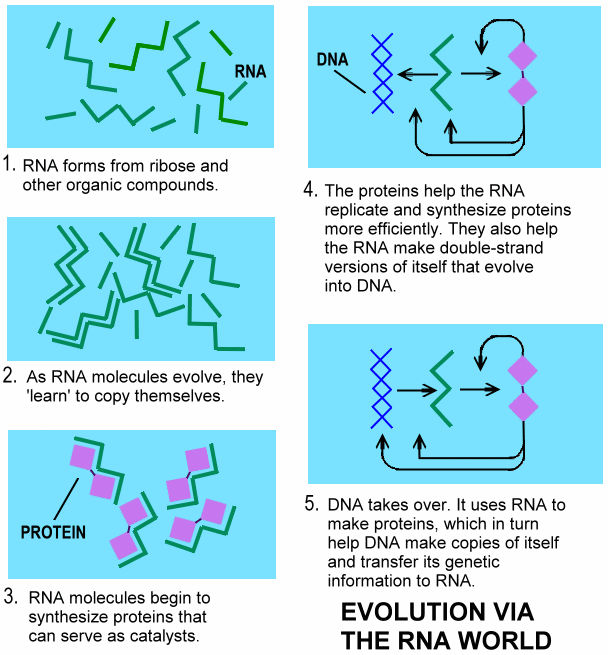
A strand of RNA such as the tRNA also trends to fold into a structure similar to a protein or enzyme. This ability of the RNA has inspired the hypothetical RNA world in considering the origin of life. The single-strand RNA can fold up to various shapes, depending on the sequence of its bases. The three-dimensional structure results from hydrogen bonding between the complementary bases and between other bases. These forces twist the strand into a partial double helix with a tertiary structure. When certain strategic bonds are broken, this usually stable structure untwists to a one-dimensional form, which is more suitable for information transfer.
An enzyme is a special kind of protein that can accelerate chemical reaction while retaining its own structure. A chemical reaction is about two molecules coming together and altering their structures. Firstly they need a chance to approach each other, the frequency of encounter depends on the concentration of the reactants. Then they should have enough kinetic energy to overcome the potential barrier (activation energy), this energy is related to the temperature. Finally, there is a special orientation of the reactants such that the reaction would proceed much faster, sometimes a million folds faster. Such favourable condition can be created with a special material called enzyme or catalyst. The enzyme forces the reactants into a position most suitable to execute the reaction. The enzyme itself does not change and can be re-used again and again. For inorganic chemical reactions, enzyme may not be necessary since the inorganic molecules have high degree of symmetry. For organic chemical reaction, the symmetry for the molecules involved is much lower or none at all; therefore, most chemical processes in life depend on the assistance of the enzyme.
[Top]
 |
 |
There are two types of cells: prokaryotic and eukaryotic. Prokaryotic cells have no nucleus and form unicellular organisms such as bacteria. The cells in protista, fungi, plants and animals are eukaryotic cells, which have a nucleus.
In a eukaryotic cell, the plasma membrane is a lipid bilayer that separates the materials inside the cell from the environment surrounding it. |
|
|
The outer surface of the membrane contains structures that allow cells to communicate with each other. |
The nucleus contains the genes that control DNA replication and protein synthesis of the cell (Figure 11-31). The cytoplasm consists of all the materials between the nucleus and the plasma membrane. The cytosol, which is the fluid part of the cytoplasm, is an aqueous solution of electrolytes and enzymes that catalyze many the cell's chemical reactions.
Within the cells are specialized structure called organelles that carry out specific functions in the cell. The cell structure is shown in Figure 11-30, the functions of the cell are shown in Table 11-02 below.
| STRUCTURE |
DESCRIPTION |
FUNCTION |
PKC |
| STRUCTURAL ELEMENTS |
|
|
|
| Cytosketeton |
Network of protein filaments |
Structural support; cell movement |
No |
| Flagella(cilia, microvilli) |
Cellular extensions |
Motility or moving fluids over surfaces |
Yes |
| Centrioles |
Hollow microtubules |
Moving chromosomes during cell division |
No |
| ENDOMEMBRANE SYSTEM |
|
|
|
| Plasma membrane |
Lipid bilayer in which proteins are embedded |
Regulates what passes into and out of cell; cell-to-cell communication |
Yes |
| Endoplasmic reticulum |
Network of internal membranes; forms compartments and vesicles |
Rough type processes proteins for secretion and synthesizes phospholipids; smooth type synthesize fats and steroids |
No |
| Nucleus |
Structure bounded by double membrane; contains chromosomes |
Control center of cell; directs protein synthesis and cell reproduction |
No |
| Golgi complex |
Stacks of flattened vesicles |
Modifies and packages proteins for export from cell; forms secretory vesicles |
No |
| Lysosomes |
Vesicles derived from Golgi complex that contain hydrolytic digestive enzymes |
Digest worn-out mitochondria and cell debris; play role in cell death |
No |
| ENERGY-PRODUCTING ORGANELLES |
|
|
|
| Mitochondria |
Bacteria-like elements with inner membrane |
Power plant of the cell; site of oxidative metabolism; synthesis of ATP |
No |
| ORGANELLES OF GENE EXPRESSION |
|
|
|
| Chromosomes |
Long threads of DNA that form a complex with protein |
Contain hereditary information |
Yes |
| Nucleolus |
Site of rRNA synthesis |
Assembles ribosomes |
No |
| Ribosomes |
Small, complex assemblies of protein, often bound to ER |
Site of protein synthesis |
Yes |
Table 11-02 Cell Organization
PKC - Absence or presence in prokaryotic cells.
 |
The nucleus is of primary importance in the cell because it is the control center that oversees the metabolic functioning of the cell and ultimately determines the cell's characteristics. Within the nucleus, there are masses of threads called chromatin, which is indistinct in the non-dividing cell, but it condenses to chromosomes at the time of cell division. Figure 11-32 shows the packed chromosome unwinding to a DNA strand. The nucleolus is the specialized part of chromatin in which the ribosomal RNA (rRNA), is produced (Figure 11-31).
The telomeres lie at the tips of the chromosome. They have hundreds to thousands of repeats of a specific 6-nucleotide DNA sequence. The telomeres lose 50 to 200 of these nucleotides at each mitosis; gradually shortening the chromosome. After about 50 divisions, a critical amount of telomere DNA is lost, which somehow signals the cell to stop mitosis. The cell may remain alive for a while but is unable to divide further. This is the cellular clock, which pre-determines the life span of the cell.
[view large image]
|
Figure 11-32 Chromosome, DNA |
|
[Top]
 |
The 24 chromosome types in human cells are numbered from largest to smallest - 1 to 22. Each type occurs in allelic pair, with length ranged from 279 Mb (megabase) for chromosome 1 to 48 Mb for chromosome 22. The exceptions are the X-Y chromosomal pair (see Figure 11-33); while the X chromosome has a length of 163 Mb, the Y chromosome is only 51 Mb long. These two chromosomes determine gender (male or female) in birds and mammals. There was a time, around 300 million years ago, when there was not a Y chromosome. Instead, most animals had a pair of identical Xs and gender was determined by other factors, such as temperature (in some amphibians and reptiles, eggs still hatch out as males above a certain temperature and as females below it). Then, in one of those dramatic evolutionary transformations that created the Y, a gene on an X chromosome in a particular mammal mutated. It endowed a special feature to the carrier we now called male and survived by putting a block |
Figure 11-33 The X-Y Chromosomes |
on the process of swapping genes (crossover) with the other X of its pair (otherwise it would have been weeded out). Gradually, the X with the rogue gene was able to do less and less trading with its unaltered partner, and took on an identity of its own, as the Y chromosome. Thereafter, the carrier of two X chromosomes is developed into female, while the one with a X-Y pair becomes male (for some reasons the reverse is true for birds). In humans, the sexes look alike until the sixth week of prenatal development. All embryos contain two-sided, unspecialized gonads (organs that will become either testes or ovaries) and two sets of tubes. At the sixth week, one of two events occurs: cascades of a hormone (by the Y chromosome) steer development along a male route, or in the absence of this hormonal exposure, development continues along a female pathway (the default). The human Y chromosome has been sequenced in 2003, a summary of the new genetic information can be found in the appendix - "Y chromosome".
 |
Long before the sequencing of the Y chromosome in 2003, geneticist Ms. Jane Gitshier of the University of California, San Francisco had already come up with her own map of the human Y chromosome as shown in Figure 11-34 (published in the August 1993 issue of Science). It purported to have located genes for such stereotypically male traits as flipping between TV channels, interest in the sports pages of newspapers and an inability to express affection over the phone - among others. The only thing wrong with the diagram is that these male behaviours come not from specific genes for each of them, but from the general masculinisation of the brain by hormones such as testosterone, which results in a tendency to behave this way in the modern environment. Boys are more competitive, more interested in machines, weapons and deeds. Girls are more interested in people, clothes and words. Thus, in a sense, many masculine habits are all the products of the SRY gene itself, which sets in train the series of events that lead to the masculinisation of the brain as well as the body. The evidence from zoology has always pointed that way: male behaviour is systematically different from female behaviour in most species and the difference has an innate component. The brain is an organ with innate gender. |
Figure 11-34 Y Chromosome, A Woman's View |
|
[Top]
See DNA Sequencing for the techniques to read the DNA text.
 |
A gene is the part of a DNA sequence containing information about the amino acid sequence of one protein. Genes used to be studied one at a time, but with the invention of DNA sequencing machines it has become possible to consider the total DNA of an organism, usually referred to as its genome5.
The genomes of many bacteria consist of a single, circular chromosome. Human and other animal cells have linear chromosomes. An important feature of animal genomes is that much of the DNA does not code for genes. The non-coding DNA, also known as junk DNA, consists mostly of the same few sequences repeated over and over again. They are often inserted within a region of coding gene. The purpose of the noncoding DNA, if any, is not understood. As much as 97% of human DNA is noncoding. Some researches show that they might be used as testing site for genetic mutation;
|
| |
other suggests that they might have a controlling function.
|
 |
Bacterial genomes are far more compact than eukaryotic genomes. They have very little noncoding DNA (introns). The number of genes and base pairs for some organisms are shown in Figure 11-35a. The mouse genome sequence reveals about 30,000 genes, with 99% having direct counterparts in humans. It seems to indicate that complexity is not solely determined by the number of genes, it may also be related to the regulation of these genes 7. Figure 11-35b shows that the number |
| |
of chromosomes is unrelated to complexity. It could be just the error in chromosome segregation during cell |
division. An extra pair of chromosomes was retained by mistake. Over time, mutations would accumulate in the duplicated pair until they were so divergent that they were clearly distinct.
Recent research in 2003 has found that many of the non-coding genes play major roles in the health and development of plants and animals. Active forms of RNA also help to regulate a separate "epigenetic6" layer of heritable information that resides in the chromosomes but outside the DNA sequence. Lately a new kind of RNA has been discovered. Dubbed riboswitches, these long RNAs are both coding and non-coding at once. They produce protein only when activated by target chemical. These precision genetic switches have been identified from species in all five kingdoms of life. This implies that they were probably present in the last common ancestor, not long after the dawn of evolution. They may be the living relic from the RNA world 3.8 billion years ago.
The role of junk DNA becomes clearer by 2004. It is found that it may serve the function of gene regulation. The introns are not merely discarded after separating from the mRNA (the exons in the gene). Some of them are processed into MicroRNAs,
 |
which regulate the gene expression similar to some of the proteins translated by the mRNAs (see Figure 11-36a). Aside from introns, the other great source of presumed genomic junk - accounting for about 40% of the human genome - comprises transposons (a.k.a. jumping genes or transposable elements) and other repetitive elements. These sequences are widely regarded as molecular parasites that, like introns, colonized our genomes in waves at different times in evolutionary history. Evidence suggests that transposons contribute to the evolution and genomic regulation of higher organisms and may play a key role in epigenetic inheritance (the modification of genetic traits). The A-to-I (adenosine-to-inosine) editing process, in which a RNA sequence changes at a very specific site, occurs in repeat sequences call Alu elements that reside in noncoding RNA |
| |
sequences. It is particularly active in the brain, and is two orders of magnitude more widespread in humans than was previously thought. What was dismissed as junk because it was not understood may well turn out to hold the secrets to human complexity. |
By 2006 the transposable elements (TEs) are increasingly seen as major originators of genetic change, allowing populations to adapt to change and species to evolve (new phenotype produced from a genotype induced by environmental change), as
 |
shown in Figure 11-36b. They can also move between genomes of different species. Such horizontal transfer allows these elements to escape the various regulatory mechanisms imposed on them by their host genome, and to invade new genomes where they increase their copy number until new mechanisms evolve there to limit their spread. Limiting forces are also at work at the population level. These forces suggest that there is selection against the direct deleterious effects of insertions, even if these effects are small, and against the chromosomal rearrangements that frequently occur when TEs of the same family are
|
| |
present. As a result of these controlling forces, genomes contain a mixture of TEs, some of which are still active, whereas others are ancient relics that have degenerated.
|
There is an unexpected application of the non-coding DNA in modern life. Since the number of repeats is highly variable among individuals, DNA profiles has been compiled to replace fingerprints as personal identification or for paternity testing.
Comparison of the genes in 100 species found only 60 genes in common to all. This number may not be enough to maintain a cell-based life form in a hypothetical "last universal common ancestor" (LUCA) as depicted in Figure 10-02b. It is possible that much of the evolutionary record has been erased from species' genomes due to gene loss as organisms adapt to new conditions and ditch redundant genetic material. The minimal gene set to produce a viable organism has been estimated initially to consist of about 250 genes; further analysis reduced the number to about 80. They are related to various functional classes such as: replication (including recombination, and repair), transcription, translation (including ribosome structure, and bio-genesis), metabolism, and cellular processes (including chaperone functions, secretion, cell division, and cell wall biogenesis).
 |
In 2006, the Craig Venter Institute started working on a minimal genome containing less than 400 genes but which nevertheless has everything it takes to sustain a free-living cell. It represents a step forward (or backward pointing to the origin of life) toward the creation of living entity from inanimated molecules. Figure 11-36c illustrates the four steps in producing the "synthetic life". In the trial run, the genome of the Mycoplasma
|
| |
capricolum is extracted to imitate the minimal genome (in testing the transplant method). The real synthesis may be just weeks or months away (as of July, 2007).
|
A progress report in January 2008 indicates that they have successfully stitched together an entire bacterial genome (about 580000 bases for the pathogenic bacterium Mycoplasma genitalium using DNA-linking enzymes) from custom-made fragments of about 5000 - 7000 bases each. It is stressed that even if a long string of DNA could be made in the lab, it could fall apart once stuck into a cell in the next step. There are many other factors that go into getting these synthetic genes to survive in cells. The ultimate plan is to produce a stripped-down version of the M. genitalium genome (the minimal genome) that might serve as a general-purpose chassis to which might be added all sorts of useful designer functions, such as genes that turn the bacteria into biological factories for making carbon-based ‘green’ fuels or hydrogen when fed with nutrients.
The transplanting steps (Figure 11-36c):
- Incubation - A naked circular chromosome containing the minimal genome is incubated in a rich bacterial culture.
- Membrane fusion - The solution contains a polymer called polyethylene glycol (PEG), which makes cell membranes fuse. The product sometimes has the minimal genome encapsulated inside.
- Cell division - The cell containing multiple genomes soon divides to form daughter cells.
- Elimination of host cell - The culture is then treated with the antibiotic tetracycline, which wipes out the cells containing the host genome while the cells with the minimal genome survive and grow.
The Craig Venter team announced in May 2010 that they have successfully recreated life with the following steps:
 |
1. They bought 1000 1080-base lifeless DNA sequences from a company. The whole M. mycoides bacterial genome is contained in this pool.
2. To facilitate their assembly in the correct order, the ends of each sequence had 80 bases overlapped with its neighbors. This is the "watermark" to identify the assembled genome as synthetic. In addition, 4 of the ordered DNA sequences code the e-mail address of the team member to double check the identity.
3. Yeast is used to assemble the synthetic DNA in stages - stitching them together in the order of 10,000-base first, then 100,00, and finally the complete genome.
4. This bacterial genome is used to replace the genome of another bacterium called
|
| |
M. capricolum. After months of trying, they eventually found one morning that a blue colony of bacteria had rapidly grown on a lab plate (Figure 11-36d, with the self-replicating bacteria in an electron micrograph, and a portrait of Dr. J. Craig). |
Since the effort required a lot of helps from other living organisms, this experiment actually demonstrated only partially that some lifeless macro-molecules can be transformed to a living entity, which can replicate itself. Such event would not happen on Earth 4 billion years ago when it was totally lifeless. Anyway, it would be a successful venture for Dr. J. Craig and company as their purpose is to produce fuel, oil dispersant, garbage disposal, ... etc via a particular sequence of DNA.
More recent study (of the genomes of Archaea, bacteria, fungi, plants, and animals) expands the number of "immortal" genes to about 500. These genes have survived through an immense time of about 2 billion years and life will continue to depend upon this core set of genes as it evolves in the future. It is noted that most of the similarities between archaea and eukaryotes were in so-called informational genes whose products dealt with the copying and decoding of DNA; while most of the similarities between eukaryptes and bacteria were in operational genes involved in the metabolism of various nutrients and basic cellular materials. It appeared as though the eukaryotes got their "brains" (informational genes) from one parent, and their "looks" (operational genes) from another (see "ring of life").
The creation of complex objects, whether houses or horses, demands two kinds of specifications: one for the components and one for the system that guides their assembly. The component molecules that make up different organisms are fundamentally alike: around 99% of the proteins in humans have recognizable equivalents in mice, and vice versa; many of those proteins are also conserved in other animals, and those involved in basic cellular processes are conserved in all eukaryotes. So it must be the architectural information that accounts for the diversity of animals. Since the amount of regulation increases as a nonlinear function of complex and protein regulation has its limitation, it is suggested that the rise of multicellular organisms over the past billion
 |
years was a consequence of the transition to a new control mechanism based largely on RNA regulatory signals from the junk DNAs. The evolution of complexity (in term of new regulatory system) helps to explain the phenomenon of the Cambrian explosion about 52.5 million years ago, when invertebrate animals evolved, seemingly abruptly, from much simpler life (see Figure 11-36e). |
Figure 11-36e Evolution of Complexity [view large image] |
|
Another study shows that when two large non-coding "gene deserts" were removed from the mouse genome, not only were the resulting mice viable, but their morphology, reproductive fitness, growth and longevity were indistinguishable from normal litter mates. Though some of the deleted sequences may encode functions not yet identified, the good health of these mice does suggest that there is disposable DNA in the genomes of mammals. This finding is in contrary to those just mentioned above. A possible explanation for the contradiction could be that there are so many copies of the non-coding sequence, deletion of one or two million such base pairs does not affect the biological functions.
Genes reside in the coding regions of the DNA. Normally, there are two copies of the same gene - one from each parent (see Top of Figure 11-36f). It is found that missing or extra copy of gene can cause disease in people as well as animals (see bottom of Figure 11-36f). Gene copy number variants can alter the amount of protein produced. Cell with three or more copies of a gene will tend to produce more of the protein the gene codes for than cells with the standard two copies. Because women have two copies of
 |
the X chromosome, most of the genes on one of the Xs are switched off to avoid double-dosing on these proteins compared with men, and usually only one of the alleles is expressed in the gene pair. However, not all the gene copy number variants would cause problems; it seems that many biologically important effects will only become apparent under certain conditions or at certain times in a person's life. Meanwhile, variants in gene copy number have been linked to autism, schizophrenia, bipolar disorder, Parkinson's, a kidney disease and a rare, inherited form of early-onset Alzheimer's disease. |
| |
|
By 2008, it has been widely recognized that human genome is very similar to other vertebrates with counterpart in them for at least 99% of all our genes. It is known that fewer than 10% of all genes are devoted to the construction and patterning of animal bodies during their development from fertilized egg to adult. The rest are involved in the everyday tasks of cells within various organs
 |
and tissues. The discovery that body-building proteins are even more alike on average than other proteins seem to contradict with the diversification of anatomical forms. It turns out that certain noncoding DNA sequences play a critical part in directing when and where to express a particular gene. They are components of "genetic switches" that turn genes on or off at the right time and place in fetal development and growth. The transcription factors (DNA-binding proteins) recognize those DNA sequences known as enhancers. There can be many enhancers for a given gene. Each enhancer specifies a particular trait of an animal. Figure 11-36g shows just two enhancer sites that control the colour in the wing and abdomen of the fruit fly. This is a versatile way of making different anatomical features without changing the gene itself. Other examples include |
| |
the disappearanceof pelvic fin in the shallow-water stickleback, and the removal of a red blood cell receptor in West African population vulnerable to the malarial parasite.
|
The next level of inquiry would be to understand the mechanism to turn on/off the enhancer at the right place and correct time.
[Top]
The essence of Darwinian evolution is that natural selection for incremental variation forged the great diversity of life from its beginning as a simple ancestor (or what was re-phrased later as "the survival of the fittest."). Darwin's process of evolution involved three key components - variation, selection, and time. He had been struggling ever since to explain the idea to skeptical audience how slight variations would be selected for and accumulate over a period of time that was beyond human experience. It seems as if the human brain were specifically designed to misunderstand Darwinism, and to find it hard to believe. It wasn't until some fifty years after "The Origin of Species" that biologists finally appreciated the interplay of chance, selection, and time in concrete terms. It turns out that a little bit of everyday mathematics, the kind we use to calculate probabilities in a casino or in a lottery, and to calculate interest on savings and loans (see formula for natural selection in Figure 11-36k, where the selection coefficient s is similar to the interest rate in the more humdrum circumstance), finally convinced them that natural selection was, at least in theory, strong enough and fast enough to account for evolution.
Now, after 150 years, we can do even better by looking at the DNA in the genes and genomes, in which records are preserved for each step in the evolution. The ability to see into the machinery of evolution transforms how we look at the process. For more than a century, we were largely restricted to look only at the outside of evolution. We observed external change in the fossil record and assessed differences in anatomy. However, we had no concrete knowledge of the mechanism
 |
of variation. In other word, we did not know how the fittest are made. It turns out that the slight variations are small mutation in the genes. If such change is useful it will be passed onto future generations, otherwise it would be rooted out - the essence of natural selection. Any gene that is not useful will accumulate errors and become obsolete (fossilized). Figure 11-36h shows the types of DNA mutations that introduce trait variations. Table 11-03 lists mutations on specific gene(s) and the consequences.
|
|
|
| Species |
Gene(s) |
Function |
Mutation |
Selection for |
MYA |
| Bacterium |
Genes coding FlgL and homologues |
Locomotion |
Duplication and divergence |
Flagellar components (rod, hook, filament) |
>3000 |
| Fish |
Actinodin |
Making fins' rigid fibres |
Deletion |
Walking on land |
~ 365 |
| Giant Panda |
T1R1 |
Digesting protein |
Insertion in the 3rd & deletion in the 6th exon |
Change of diet to eating bamboo |
~ 75 |
| Old world primates |
Opsin |
Colour vision |
Duplication, fine tuning |
Trichromatic vision |
30-40 |
| Human |
V1r olfactory receptor gene |
Smell |
50% fossilized |
Decreasing sense of smell |
30-40 |
| Icefish |
Globin gene |
Making globin in hemoglobin |
Fossilized and eroded |
adaptation to cold water |
10-14 |
| Antarctic fish |
Gene for an enzyme |
Anti-freeze |
3 repeating amino acids |
Living in cold water |
10-14 |
| Colobus Monkey |
Ribonuclease gene for pancreatic enzyme |
Breaking down RNA |
Triple duplication and modification |
Ruminating stomach for fermented leaves |
~ 6 |
| S. kudriavzevii |
7 galactose genes |
Utilization of galactose |
Lost |
Living on decaying leaves |
~ 3 |
| Lactose-tolerant Populations |
Intestinal lactase gene |
Digest milk sugar lactose |
Single base-pair change in regulatory sequence |
Digest milk in adulthood |
0.009 |
| Stickleback fish |
Genes coding armor plates |
Protection in ocean |
Reduction of gene number |
Greater body flexibility in lake |
0.01 |
| Stickleback fish |
Switch for controlling Pitx1 gene expression |
Making pelvic fin |
Changed |
Reduced pelvic skeleton |
0.01 |
| Pupfish |
Thyroid hormones from the thyroid gland |
Morphologic changes |
Thyroid suppression |
Environmental adoption |
5 years |
| Blind cave fish |
Pigmentation gene |
Body colour |
Deletion of DNA text |
Albinism |
On-going |
| Birds and mammals |
MC1R |
Coloration of body |
Single letter change |
Camouflage |
On-going |
| Pea plant |
Gene for gibberellin oxidase |
Growth-stimulating hormone |
Single letter substitution, G A |
Mendel's Experiment on height of plants |
Man-made |
Table 11-03 Evolution: Mutation of Gene(s), and Natural Selection
Note: MYA - million years ago when the selection process started.
To see the evolution in action, let's consider our colour vision in detail. Colour vision of vertebrates depends on the pigments in the cone cells. It turns out that birds, as well as reptiles, and many fish, have four types of cone pigments, whereas most mammals have only two types (Figure 11-36i). Mammals lost two of the pigments during their early evolution, very likely because these animals were nocturnal and cones are not needed for vision in dim light. After the dinosaurs died out, mammals began to diversify, and the lineage that gave rise to the Old World primates of today reclaimed a third cone through duplication of the opsin gene and subsequent mutation. The evolutionary changes have been located at three amino acid sites following the duplication. The mutations are retained because they appeared to have imparted a substantial advantage on the
 |
 |
species (the old world primates) that bored them (see Figure 11-36j). The diagram shows those amino acid positions at 180, 277, and 285 within the opsin protein, which is bound to the light sensitive retinal. These differences are enough to shift the maximal light absorption from 560 nm for the red opsin to 530 nm for the green opsin. Note that mutation occurs with equal probability on all sites in the DNA; however, only those offering an advantage in survival will be retained. |
Figure 11-36i Natural Selection 
|
Figure 11-36j Mutation of Gene [view large image]
|
|
Tangible evolutionary change occurs in time scale of million years although some adaptations such as the peppered moth to the environment becomes obvious in the order of fifty years or least (Figure 11-36k). Million years is an immense amount
 |
of time to us. However, it is short in geological scale, which offers ample time, many times over, for selection to shape a trait considering our ancestors' brains doubled in size in 1 million years (about 50,000 generations). Since change in the gene only becomes effective after passing onto the progeny, ultimately it is the number of generations that contributes to the speed of evolution with time serving only as an indicator. The evolution of simpler life appears to run faster because it can produce many generations within one year. It is crucial to appreciate that selection and mutation operate in nature every day. Every environment impacts continually upon the species that inhabit and reproduce within it. Evolution is an ongoing process. Selection acts only in the present, within a given
|
Figure 11-36k Evolution Time Scale [view large image] |
environment. It cannot act on what a species no longer needs or uses. And it cannot act on what is not yet needed. Thus, fittest is a relative, transient status, not an absolute or permanent state. |
Note: For decades, the peppered moth was the textbook example of evolution in action. In the late 1990s a problem cropped up with the method of data gathering. It was seized by anti-evolution organizations as proof that the Darwinian theory is hopelessly flawed. A more rigour experiment few years later has finally restored the peppered moth as the well-understood example of evolution by natural selection.
Darwin's notion of evolutionary via gradual mutation had a long history of controversy even in Victorian times. It has come under fresh challenge with recent knowledge that many evolutionary advances were relatively abrupt, and there are "missing links" in the fossil record. It is pointed out that most fossil species share two features; first, they enter the record abruptly; second, they do not change in any marked way during the entire course of their existence. An explanation without the baggage of "intelligent design" involves both information theory and junk DNA.
In information theory, novelty is related to the number of possibilities in the message source. In living organisms, these possibilities may exist as unused information in the genes (the junk DNA). Evolutionary innovation, the creation of new organs with new functions, would then be accomplished by making the possibilities actual (through mutation in the junk DNA). Usually, a gene copy, as an extra page, is ignored by natural selection, even when accumulating mutations, as long as the "original page" of which it was a duplicate continues to serve its beneficial function. The copy is free to change in ways, which would not be tolerated in the original. Once the new gene acquires a useful meaning it may then come under the protection of natural selection and be preserved. It is noticed that major new steps in evolution were not usually taken by the most advanced member of a class of animals, which has gone into a blind alley (too much specialization). It is the more "primitive" member, which is most likely to take advantage of the copies of junk DNA - much like a sheet of white paper ready to be written upon. It is argued that explosions of gene duplication took place many times in history with sudden evolutionary advances to follow.
In case there is still lingering doubt about our evolutionary past, further supporting evidences can be found in many of our ailments that can be traced back to the shark and even microbe. Table 11-04 presents a short list of some ailments arisen from the incompatibility between the modern lifestyle or body structure and the remnant of the evolutionary past. Our body is literally jerry-rigged into a shape produced by natural selection without giving much thought to minor inconveniences.
| Ailment(s) |
Body Part(s) |
Modern Modification |
Past Existence |
| Obesity |
Body fat |
Sedentary lifestyle |
Active lifestyle in primates |
| Hemorrhoids |
Rectum |
Sitting for long hours |
Lot of walking in primates |
| Back Pain |
Lower back |
Bipedalism |
Body’s full weight was borne on four legs rather than two |
| Sleep apnea |
Throat |
Throat becomes flexible for the ability to talk |
Throat is not flexible for most mammals or reptiles |
| Hiccups |
Phrenic nerve |
Phrenic nerve takes long path to control breathing in human, its interference can cause a spasm |
Phrenic nerve takes shorter path from brain stem to gills in fish |
| Hernias |
Abdominal cavity |
The gonads in the fetus of mammals migrate from upper to lower part of the body creating weak spot in body wall around the groin area |
The gonads are located in the upper part of the body in fish and shark |
| Mitochondrial diseases |
An organelle In every cell |
Many human mitochondrial diseases are related to gene change that interrupts the normal metabolic function |
Diseases of such gene mutation in mitochondria can be duplicated in bacterium |
Table 11-04 Ailments Related to Evolutionary Past
Note: Hernias is a condition in which part of an internal organ projects abnormally through the wall of the abdominal cavity.
July 2008 Update - The asymmetry of flatfish is an exceptional morphological specialization that arises in development:
 |
starting from a symmetrical larva/juvenile, the skull is remodelled so that one eye migrates over the top of the skull to sit next to its other eye. Such change seems to mirror in the form of many living species with the pair of eyes in varying degree of togetherness. The lack of any intermediate specimen has led to attacks on natural selection and arguments for saltatory (leaping as opposite to gradual) change. The discovery of 47 million year old fossils (in 2008) of the Amphistium with its migrating eye never gets further than the dorsal midline, even in fully adult fishes has finally settled
|
Figure 11-36l Morphological Change in Flatfish [large image] |
the dispute and confirmed that evolution of the specialized flatfish bodyplan was a gradual process induced by bottom-dwelling lifestyle (see Figure 11-36l, a - d for the transition of morphology in flatfish) . |
Since "Darwinian Evolution" is just a theory (same as all the other concepts suggested by human), it should be validated by empirical evidences as all the other theories. A theory is believable if no contradiction is perceived. A theory has to be modified or discarded if it fails the test. There is also the degree of acceptance depending on the number of evidences available. The Nature Magazine has kindly provided 15 examples in a document on its website for everyone to judge whether the Darwinian Theory is a valid one.
[Top]
Microbiology
 |
Microbiology is the study of microorganisms composed of one cell, which carries out all life functions including feeding, digestion, excretion and reproduction. They are called microorganisms or microbes because they are only visible under the microscope (see "Microscope" in the appendix for detail). While some can be harmful, most are harmless, and many are beneficial and essential for the ecosystem. Bacteria and cyanobacteria are ubiquitous. They are found in arctic conditions, in all waters, and in the upper strata of the atmosphere. Species distribution in these places is generally similar to that in soils. Because of their low mass, microorganisms can be transported by air currents. They can be classified into archaebacteria, bacteria, and protista as shown in Figure 11-37a. The bacteria are sometimes further divided into gram-positive and gram-negative according to the cell wall structure. Gram-positive bacteria are more susceptible to the treatment of antibiotic such as lysozyme and penicillin. |
Figure 11-37a Evolutionary Tree [view large image] |
|
 |
Although both multicellular and unicellular organisms perform the same basic functions of life, since unicellular organisms do not possess organs; it requires different methods to absorb nutrition, to excrete waste, to grow, and to reproduce. In fact, there is already a huge gap in structure between eukaryotic and prokaryotic cells as shown in the last column of Table 11-02.
|
Figure 11-37b Prokaryotic Cell [view large image] |
Figure 11-37b shows the structure, reproduction, and growth of the prokaryotic cell. It is explained in further detail below: |
Structure - Prokaryotic cells lack most of the organelles found in eukaryotic cells. This does not mean, however, that these cells do not carry on the functions performed by organelles in eukaryotes. The functions simply occur within the cytoplasm of these much smaller cells (1-10 m comparing to the 10-100 m for eukaryotes). For example, prokaryotes have a chromosome, but it is not enclosed within a nucleus. The bacterial chromosome is composed of a single circular DNA (sometimes with an additional smaller one called plasmid) located within an area called the nucleoid region. Similarly, their respiratory enzymes are free within the cytoplasm or they are associated with the cell membrane (such as the mesosome, and other in-folding membranes as shown in Figure 11-37b). When prokaryotes have chlorophyll, there are no chloroplasts. Within cyanobacteria, chlorophyll is associated with individual thylakoids. In addition to a cell membrane, prokaryotes have a cell wall, and if motile, most possess flagella. Outside the cell wall, there may be a capsule or a slime layer.
Reproduction - Bacteria has only one set of chromosome (always haploidic). Unicellular organisms increase in size to approximately twice the original size. At that time the cell (mother cell) divides into two daughter cells by binary fission (Figure 11-37b). With each cell division the cell number doubles. Some advanced eukaryotic unicellular organisms such as the algae has evolved to exhibit life cycles with diplontic period - that means they have sophisticated sex (exchange of genetic materials) to fertilize a zygote. On the other hand, sex for bacteria is simply the fusion of genetic material from more than one individual in a single creature. Bacteria can literally rub up against each other, dissolve a common opening in their touching membranes, and slip DNA genes to each other. Alternatively, they can release bits of DNA (the plasmid) into the surrounding environment where other individuals can pick it up and assimilate it into their own DNA.
Growth - Microbial growth is defined in terms of cell number rather than size. The metabolism of bacteria can be anaerobic (without oxygen) as well as aerobic. Every type of nutrition is found among bacteria except holozoism (eating whole food). Many of them are autotrophic (capable of making nutrients from inorganic materials) including photosynthetic, chemosynthetic; while the others are heterotrophic (obtaining nourishment by digesting plant or animal matter). The process comes to a halt in unfavorable external condition; endospore is formed to protect the DNA until the danger has abated. Ultimately, the reproduction and growth of unicellular organisms take the cues from nutrient supplies and condition of the environment, while the multicellular organisms run their internal program for such functions - external cues play only a secondary role.
[Top]
Archaebacteria (Ancient Bacteria)
 |
 |
Many years ago archaebacteria were believed to be the earliest prokaryotes (cells without nucleus, i.e., the bacteria). Molecular evidence now indicates an extremely ancient separation between Bacteria and Archaea. Though they lack a nuclear membrane and are therefore prokaryotes, archaea resemble |
Figure 11-38 Archaea [view large image] |
Figure 11-39 Environment for Archaea [view large image] |
eukaryotes (cells with nucleus) in several aspects of their genetic system, including an intron / exon gene structure, and membrane infolding. Eukaryotic cells |
were derived from the archaean branch approximately 1.7 billion years ago. (see Figure 10-02.) Modern archaea are found in extreme environments requiring methanogenic, halophilic, or thermophilic metabolisms. While they are able to live elsewhere, they are usually not found there because outside of extreme environments they are competitively excluded by other organisms. Figure 11-38 shows some of the archaebacteria and Figure 11-39 shows the various environments where the archaea are thriving: (1) Halophiles in salty lakes, (2) Thermoproteus in deep-sea hydrothermal vents, (3) Sulfolobus in hot sulfur springs, (4) Methanococcus in swamps and marshes, and (5) Acidianus in acidic ponds.
[Top]
Bacteria
 |
 |
Bacteria were among the first life forms on Earth. They are very small one-celled organisms that lack a nucleus (size ~ 10-4 cm). Despite their small size, bacteria are the most abundant of any organism on Earth. They are highly adaptable. Their normally rapid reproduction rate (by asexual binary fission) and high capacity for spontaneous mutation allows |
Figure 11-40 Bacteria Shapes [view large image] |
Figure 11-41 Cyanobacteria [view large image] |
them to respond to changing environments readily. This has made them ubiquitous in the biosphere, both as free-living forms and as parasites in multicellular forms of life. They're everywhere; they can be found in the air, soil, water, on you, and inside you. In fact, there are more bacterial cells inside your gut and on your skin than there are cells in your entire body - no matter how many times you try to wash them off. Bacteria often get a bad reputation because certain types are responsible for causing a variety of illnesses, including many types of food poisoning. However, most bacteria are completely harmless and many even perform beneficial functions, such as turning milk into yogurt or cheese and helping scientists produce drugs (such as penicillin) to fight disease.
The cells of all bacteria are classified as "prokaryotic", the simplest and most ancient of the cell types. Prokaryotes lack many of the structures found in the more complex, eukaryotic cells. Bacteria occur in 3 basic shapes (Figure 11-40): rod (bacillus), spherical or round (coccus), and spiral (spirillum). The bacilli and the cooci may form chains of a length typical of the particular bacterium. When faced with unfavorable environmental conditions, some bacteria form endospores. During the formation process, the cell shrinks, rounds up within the former cell membrane, and secretes a new, thicker wall inside the old one. Endospores are amazingly resistant to extreme temperatures, drying out, and harsh chemicals, including acids and bases. When conditions are suitable for growth, the spore absorbs water, breaks out of the inner shell, and becomes a typical bacterial cell again.
Some bacteria are obligate anaerobes and are unable to grow in the presence of oxygen. Some other bacteria are able to grow in either the presence or absence of oxygen. Most bacteria, however, are aerobic and like animals require a constant supply of oxygen to carry out cellular respiration.
Every type of nutrition is found among bacteria except holozoism (eating whole food). Some autotrophic bacteria are photosynthetic. Some are chemosynthetic bacteria, which oxidize inorganic compounds to obtain necessary energy to produce their own food. The majority of bacteria are free-living aerobic heterotrophs and feed on dead organic matter by secreting digestive enzymes and absorbing the products of digestion. They are needed to complete the elementary cycles of nature (the carbon cycle, the nitrogen cycle, the phosphate cycle, and the sulphur cycle) by degrading the wastes and the corpses from higher organisms back to inorganic and mineral compounds.
Bacteria are often symbiotic; they live in association with other organisms. The nitrogen-fixing bacteria in the nodules of legumes are mutualistic, as are the bacteria that live within our own intestinal tract. We provide the bacteria with a home, and they provide us with certain vitamins.
Cyanobacteria, formerly called blue-green algae, are the most prevalent of the photosynthetic bacteria. They are believed to be responsible for first introducing oxygen into the primitive atmosphere. Cyanobacteria can be unicellular, filamentous (see Figure 11-41), or colonial. The filaments and colonies are not considered multicellular because each cell is independent of the others. Cyanobacteria lack any visible means of locomotion. They are common in fresh water, in soil, and on moist surfaces but also are found in inhospitable habitats, such as hot springs. They also form symbiotic relationships with a number of organisms, such as ferns and even at times invertebrates, like corals. In association with fungi, they form lichens, which can grow on rock. Therefore, cyanobacteria may have been among the first organisms to colonize land.
[Top]
Protista (Unicellular Eukaryotes)
 |
 |
Protista are the simplest of the eukaryotes. Protists are an unusual group of organisms that were put together because they don't really seem to belong to any other group. Some protists perform photosynthesis like plants such as the diatoms (see Figure 11-42.) while others move around and act like animals such as the amoeba (see Figure 11-43), but protists are neither plants nor animals.
|
Figure 11-42 Diatoms [view large image] |
Figure 11-43 Amoeba [view large image] |
As with all eukaryotic cells, protists contain membrane-bound nuclei and endomembrane systems, as well as numerous organelles. Movement is often provided by one or more flagella, and cilia are often present on the plasma membrane as sensory organelles. Unlike prokaryotes, protistan nuclei contain multiple DNA strands, though the total number of nucleotides is significantly less than that in more complex eukaryotes. Protists can reproduce mitotically, and some are capable of meiosis for sexual reproduction. Cellular respiration in the kingdom is primarily an aerobic process, but some protists, including those that live in mud below ponds or in animal digestive tracts, are strict or facultative anaerobes.
Protists represent an important step in early evolution, evolving from prokaryotes and eventually giving rise to the entire line of eukaryotes. The first protists probably evolved 1.7 billion years ago, 2.3 billion years after the origin of life, from simple communities of prokaryotic cells. Membrane infolding was one of the defining processes in this evolution: in some prokaryotic cells, parts of the plama membrane folded into the cell to create the nuclear envelope and the other organelles of the endomembrane system. The second major step in the evolution of protists from bacteria was the process of endosymbiosis, which introduced the mitochondrion and chloroplast as organelles of eukaryotic cells. Small prokaryotic cells capable of cellular respiration or photosynthesis entered eukaryotic cells, either as parasites or indigestible food, and these prokaryotes evolved into mitochondria and chloroplasts as they developed a symbiotic relationship with the host cell. (Because mitochondria are present in all eukaryoptic cells, this process probably happened to mitochondria first.) As a result of these two processes, protists evolved as sucessful organisms. Eventually, colonial protists evolved into plants, fungi, and animals, of the eukaryotic kingdom, which came to dominate the earth.
Protista is divided into four major groups by lifestyle: the protozoans, the slime molds, the unicellular algae, and the multicellular algae. Protozoans include all protists that ingest their food, and thus they live primarily in aquatic habitats, such as ponds, drops of water in soil, or the digestive tracts of animals. In the latter capacity, a small number of protozoans function as parasites. The slime molds in the second group are unique in having both unicellular and multicellular stages. When sufficient bacteria (food) are present, cellular slime molds are single amoeboid cells; however, when food becomes scarce, they aggregate into slug-like colonies, which become large reproductive structures. Plasmodial slime molds also exist as single cells when nutrients are plentiful, but each cell can grow into a large, branching plasmodium with many nuclei. This differentiates into reproductive structures when food is scarce. The third and fourth groups of protists, the algae, contain chloroplasts and photosynthesize like plants; these can be unicellular, colonial, or multicellular. Multicellular marine algae, the seaweeds, are similar to marine plants, and many biologists support moving seaweed into the plant kingdom.
Diatoms (see Figure 11-42.) have a golden brown accessory pigment in their chloroplasts that can mask the color of chlorophyll. The structure of a diatom often is compared to a box because the cell wall has 2 halves, or valves, with the larger valve acting as a "lid" for the smaller valve. The cell wall of the diatom has an outer layer of silica, a common ingredient of glass. Diatoms are among the most numerous of all unicellular algae in the oceans. As such, they serve as an important source of food for other organisms.
Amoeba proteus (see Figure 11-43.) are a small mass of cytoplasm without any definite shape. They move about and feed by means of cytoplasmic extensions called pseudopodia, or false feet. A pseudopodium forms when the cytoplasm streams forward in the particular direction. The organelles within an amoeba include food or digestive vacuoles and contractile vacuoles (for expelling waste).
Further details of micro-organisms evolution are described in an appendix - Evolution of Micro-organisms and Plants.
[Top]
Footnotes
1The Murchison meteorite was recovered in Australia in 1969. Analysis of the meteorite found over 90 types of amino acids as well as some left-handed sugar that does not exist naturally on Earth. This rare form of substance tends to prove the extraterrestrial origin of the rest of the contents. The Murchison meteorite contains the same amino acids obtained by Stanley Miller in his laboratory, and even in the same relative proportions
2Metabolism is the sum of all chemical activities occurring inside a living cell. Metabolic cycle (pathway) begins with a particular reactant and terminate with an end product.
3The bonding energy for the various chemical bonds are roughly in the ratio - Van der Waals : Hydrogen Bonds : Covalent Bonds = 1 : 10 : 100. Formation of hydrogen bonds releases 3 - 10 kcal/mole (~ 0.1 - 0.4 ev). Hydrogen bonds are found between only a few elements of the periodic table. The most common are those in which H connects two atoms from the group F, O, N, and, less commonly, Cl. The hydrogen bond in water has the configuration: H-O-H(+)……..(-)O=H2. Covalent bonds are created with sharing electrons in between two atomic nuclei. A stable configuration can be achieved by sharing up to three pairs of electrons. Van der Waals forces are the intermolecular attractions produced by temporary dipoles (shifting of electrons).
4The ev is an energy unit called electron volt. It is defined as the energy acquired by a particle of one electronic charge e, accelerated through a potential difference of 1 volt. Approximately 1 ev ~ 1.6 x 10⁻¹⁹ joule. Photosynthesis peaks at a wavelength of around 700 nm (red light), which carries an energy of about 5 ev.
5The human genome selected the most common alleles over a number of individuals or from just one person. DNA sequence variations among individuals do occur, it is called polymorphisms. Alleles are detectable variations occurring at a single genetic locus (location). Where allelic variation is frequently found (say that at least 10% of chromosomes have an allele other than the most commonly occurring one) one refers to "a polymorphism". If variation is rare one is more likely to speak of "a mutation". SNP (Single Nucleotide Polymorphisms) refers to variation of just one nucleotide. The SNP consortium (TSC) is a public/private collaboration that has to date discovered and characterized nearly 1.8 million SNPs, which are important in tracing the evolution of the human race and controlling human diseases.
6Epigenetics is the study of heritable changes in gene function that occur without a change in the DNA sequence. Epigenetic mechanisms includes histone modification, DNA methylation (replacing H with CH3), and RNA interference. DNA methylation is to add a methyl group to the DNA - frequently to the base cytosine when it is immediately followed by guanine. The methyl group can be sensed by proteins that turn gene expression on or off through regulating chromatin structure. Histone modification involves the chemical tags attached to the "tails" of the histones. There are more than twenty different tags, or certain combinations of them, that can either give rise to relaxed chromatin, which allows the assembly of transcription factors and transcription by RNA polymerase, or produce the opposite effect. If the DNA sequence of the genome is like the musical score in a song, then the epigenome is like the musical notations that show how the notes of the melody should be played. The sequence of the human genome is the same in all our cells, whereas the epigenome differs from tissue to tissue, and changes in response to the cell's environment. Their effects in gene inactivation and activation are increasingly understood to be very important in phenotype transmission and embryonic development.
7The birth of CC (a.k.a. Copy Cat), the cloned cat, shows that the characteristics of the clone can be very different from its genetic parent. Recent work in pig cloning found that some attributes - such as the levels of albumin and calcium in blood - varied less in clones than in a control group of naturally bred pigs. Yet a surprising variety of other traits - including blood glucose and globulins, hair type, number of teats and weight - fluctuate as much in clones as in controls. These characteristics, like the pattern of CC's coat, are influenced by environmental factors and "epigenetic" controls that affect gene expression.
[Top]
[Top]
Index
[Home Page]
|