| Home Page | Overview | Site Map | Index | Appendix | Illustration | About | Contact | Update | FAQ |
|
|
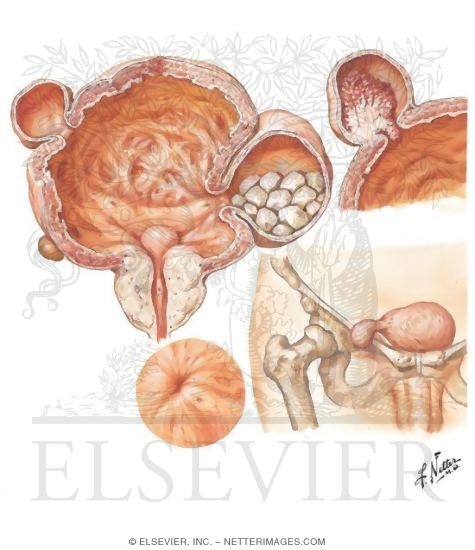
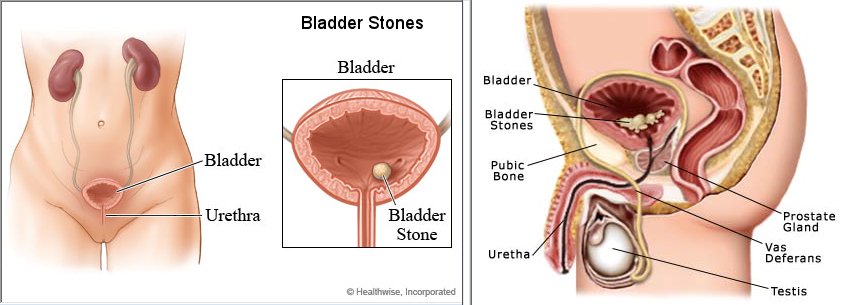
It is the chordates which eat food and drink fluid at one end and have the un-wanted stuffs removed from another end. In most vertebrates (and even some primitive mammals or human embryo up to 8 weeks), the digestive, urinary, and reproductive tracts terminate in a single opening called the cloaca. Human evolved to have two (in male) or three (in female) openings to perform these functions separately (Figure 35). Urology is the branch of medicine that deals with diseases of the male and female urinary tract and the male reproductive organs. The organs under the domain of urology include the kidneys, adrenal glands, ureters, urinary bladder, urethra, and the male reproductive organs (testes, epididymis, vas deferens, seminal vesicles, prostate and penis); the female's are under "gynecology". Figure 36 shows pictorially the kind of diseases afflicted on this system. Table 07 is a list for some of those. |
Figure 35 Urinary Tract |
Figure 36 Urology |
BTW, we still breath in clean air and exhale used gas through the same opening - the nose. Fortunately, it is colorless and odorless. |
| Disease | Symptom(s) | Cause(s) | Treatment(s) |
|---|---|---|---|
| Acute Renal Failure | Decreased urine output, swelling in legs, drowsiness, shortness of breath, fatigue, nausea, Chest pain, coma | Impaired blood flow to kidneys, damaged kidneys, urinary obstructions | Medications, dialysis (  see link) see link) |
| Chronic Renal Failure | Abnormal urination, edema, fatigue, shortness of breath, loss of appetite, nausea, weight loss, itchy skin, cramping, yellowish-brown skin | Diabetes, high blood pressure, genetic, infection, drug over-use | Control underlying causes, dialysis, transplant ( see link) |
| Benign Prostatic Hypertrophy (BPH) | Problems with urination | Prostate gland enlargement with aging | No cure, try over-the-counter medicines, surgery ( see link) |
| Bladder Diverticulum | Urinary retention, urinary tract infection, blood in the urine | Bladder outpouching - congenital, or via other bladder/urethral problems | Open or laparoscopic surgery ( see link) |
| Bladder Stones | Abdominal pain, difficulty with urination, blood/dark urine, pain in penis | BPH, damaged nerves, inflammation, kidney stones | Laser/ultrasound/mechanical device to break stone, surgery ( see link) |
| Erectile Dysfunction (ED) | Inability to develop or maintain an erection of the penis during sexual activity | Aging, cardiovascular disease, diabetes, neurological problems, hormonal insufficiencies, drug side effects, psychological | Exercise, oral/injection drugs, erection devices, penile implants ( see link) |
| Hydronephrosis | Pain in the abdomen, nausea, vomiting, pain and abnormality in urination, fever | Blockage in ureters | Removal of the obstruction ( see link) |
| Interstitial Cystitis (IC) | Pain in bladder and surrounding area, frequent urination | Chronic inflammation by defect in bladder lining, immune system disorders, changes in bladder nerves | No cure, can try distention, instillation, drugs for short term relief ( see link) |
| Kidney Stone | Pains, colored urine, abnormal urination | Formation of crystal of calcium, oxalate, uric acid or cystinuria in kidney or ureter | Drink plenty of water, medications, break up stones ( see link) |
| Papillary Necrosis | Blood/tissue fragments in Urine, flank pain, fever and chills | Restriction of blood supply to tissues by sickle cell disease, diabetes, kidney inflammation | No specific treatment ( see link) |
| Urethritis | Abnormal urination | Urethral infection by bacteria from skin around the urethra's opening | Antibiotics ( see link) |
 |
The gonad is the organ that eventually makes the gametes - the testes in male, and the ovaries in female. Within the gonads are the germ cells which origanate from the primordial germ cells (PGCs) in the yolk sac and then migrate into the developing gonads - the genital ridges (Figure 37). The PGCs would undergo meiosis to produce the male and female germ cells, i.e., the sperms and eggs. As shown in Figure 37 the gonads are resided in the middle of the body both in lower vertebrates such as the shark and early human embryo. Starting at about 8 weeks, the gonads in the embryo gradually migrate to the lower end of the body joining one of the two openings in male. The process creates weak spot in that part of the body wall causing many men to develop hernia in old age. Evolution has no fore-sight on this problem because it does not anticipate human to live to such a ripe old age. |
Figure 37 Gonad Migration |